

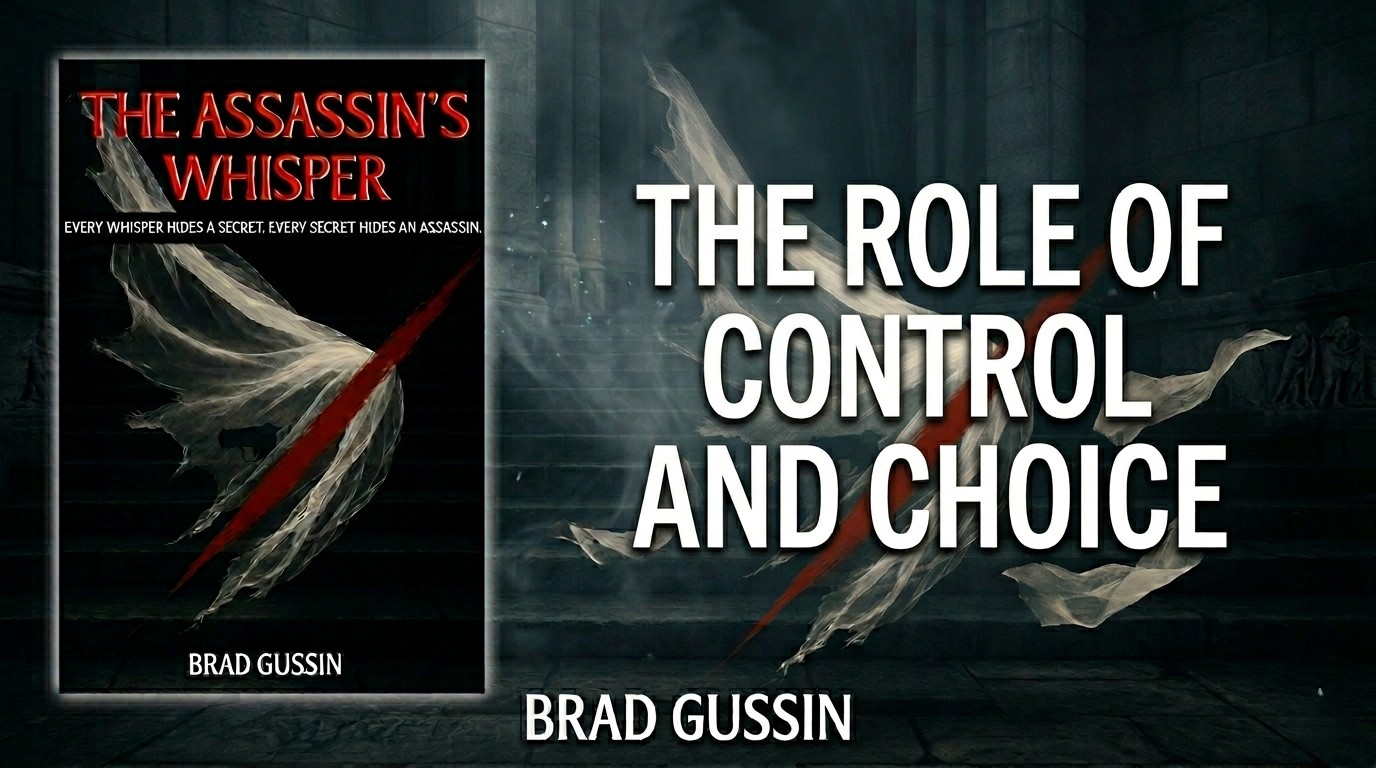
In The Assassin’s Whisper, author Brad Gussin explores a question that sits quietly beneath the surface of the story. How much of our choice is truly our own? This question drives the tension of the novel and shapes the actions of every major character.
Rather than focusing on obvious power struggles, Brad Gussin looks at control in subtle forms. The story shows how influence can guide decisions without force and how this guidance blurs the line between free will and control.
Control That Is Not Always Visible
In The Assassin’s Whisper, influence is more important than command. People who whisper don’t give orders. They help people make decisions by guiding their thoughts and feelings.
Brad Gussin uses this idea to show how control works in the real world most of the time. People think they are making their own choices, even when outside forces are affecting how they think. This makes the idea of Whisperers seem real instead of over-the-top.
In the book, control is quiet, careful, and planned.
Scott Edwards and the Burden of Choice
Scott Edwards is a key part of the book’s look at choice. He knows how easy it is for someone to change their mind as a Whisperer. He is careful because he knows this.
Brad Gussin shows Scott as someone who respects choice, even when he could change it. He often thinks twice before acting because he knows that influence takes something important away from the person it affects.
This pause causes a lot of inner conflict. Scott has to figure out when it’s okay to step in and when it’s best to stay quiet. There are no simple solutions, and Brad Gussin lets the tension of these decisions stay unresolved.
When Help Turns into Control
One of the strongest themes in the book is how close guidance and control are to each other. Brad Gussin puts characters in situations where they can use their power to stop harm, but it also takes away their freedom.
Is it okay to help someone if it makes things safer?
Does good intent make control okay?
There are no clear answers in the story. It shows what happens when you make each choice instead. Some choices keep people safe. Some make things worse.
This method makes readers think instead of judging.
People Who Use Control Without Limits
The bad guys in The Assassin’s Whisper show how dangerous it is to have control without discipline. They use their power freely and without worrying about what will happen, unlike Scott.
Brad Gussin compares these characters to the Whisperers, who are more careful. This difference shows how important it is to be responsible. The issue is not power itself. The way it is used matters.
The novel looks at how control can quickly turn into abuse by showing two different ways of doing things.
Choice as a Source of Stress
A lot of the story’s tension comes from choice. Brad Gussin builds tension not only with outside threats, but also with choices that people make.
Scott has to decide whether or not to act in situations that are often more intense than physical fights. Readers know that once you use your influence, you can’t take it back.
This focus on choice keeps the story real. It reminds people that having power means being responsible.
A World Built on Results
The Assassin’s Whisper shows that actions have long-lasting effects. Brad Gussin doesn’t let his characters get away with the choices they make.
A single whisper can change things long after it is said. This feeling of consequence makes the story more real and important.
Readers learn that small choices can have big effects. This makes the main ideas of the book stronger.
Writing clearly helps with hard ideas.
Brad Gussin writes clearly and understandably, even though he talks about complicated ideas. The words are easy to understand, so the ideas can stand on their own.
This clarity helps readers get into the story without feeling like they have to do too much. It also makes the moral questions easier to understand.
The emphasis continues to be on character and meaning rather than technical explanation.
Why This Theme is Important
Every day, we have to make choices and have control. The media, authority, and relationships have a constant effect on people. Brad Gussin uses made-up stories to think about these real-life situations.
Readers might think about how often things they can’t see affect their choices. This gives the book a sense of importance and relevance.
Who Will This Story Speak To?
The Assassin’s Whisper is a good book for people who like thrillers that make them think. People who are interested in psychology, ethics, and how people act will find the themes interesting.
Readers who like stories that make them think instead of giving them simple answers will like this book a lot.
Last Thoughts
Brad Gussin shows in The Assassin’s Whisper that control can be a powerful and dangerous tool. The book goes beyond typical thrillers by focusing on choice and consequence.
It reminds people that real power doesn’t come from violence, but from being able to change people’s minds. And with that power comes a duty that can’t be ignored.