


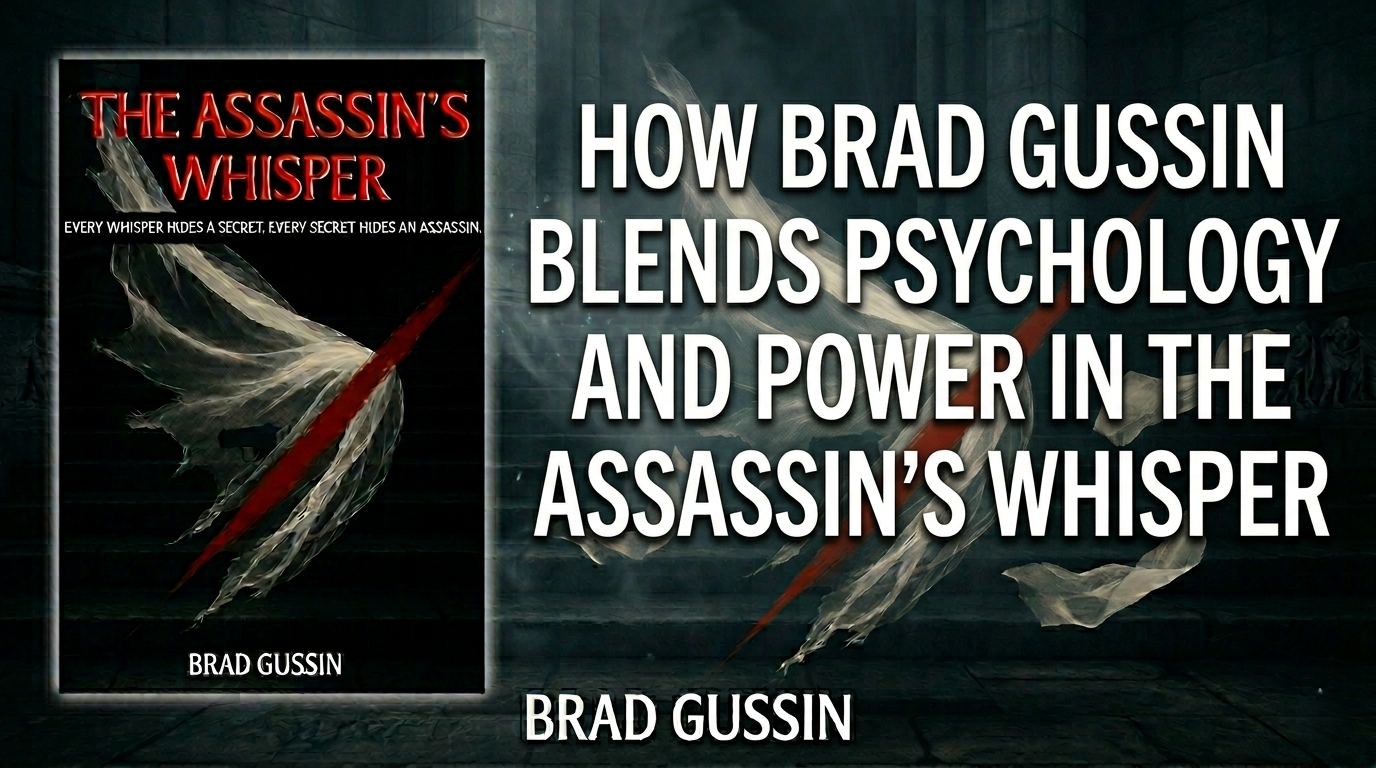
One of the reasons The Assassin’s Whisper stands out is how deeply it explores the human mind. Author Brad Gussin does not treat power as something physical alone. Instead, he focuses on psychology, perception, and influence. The result is a thriller that feels thoughtful and realistic.
Rather than asking who has the strongest weapon, the novel asks who understands people best. This shift makes the story feel different from typical thrillers and adds depth to every interaction.
Power Begins in the Mind
In The Assassin’s Whisper, the first step to getting power is to know how people think. People who whisper are taught how to read feelings, reactions, and uncertainty. They can see fear, confidence, and doubt.
Brad Gussin shows that influence works best when it seems natural. Someone may think that a thought they hear is their own if it is put in the right place. This makes it easier to control things, but also more dangerous.
The book says that people are most at risk when they think they are in complete control.
Scott Edwards as a Psychological Watcher
Scott Edwards is more than just a participant in events. He watches how people act. Brad Gussin writes Scott as someone who watches people closely before doing anything.
Scott talks less than he listens. He sees how people act when they are under stress. This awareness lets him change things with great accuracy.
This deep understanding, on the other hand, makes things feel far away. Scott can see people clearly, but he can’t always talk to them openly. This emotional distance makes his character more complicated.
Influence Without Coercion
One of the main ideas in the book is that force is not always needed. Brad Gussin shows how influence can change what people do without having to fight.
Whisperers don’t often push. They make suggestions. They let people go in a certain direction while making them think it was their own choice. This makes it hard to see and resist influence.
This method seems real because it shows how persuasion works in real life. Tone, timing, and emotion, not orders, shape decisions.
The Psychology of Trust
In The Assassin’s Whisper, trust is very important. Brad Gussin looks at how trust is made, tested, and broken.
When people feel safe, they are more likely to be influenced. People who whisper know this and use it wisely. It can take time, patience, and consistency to earn someone’s trust.
When trust is gone, influence can be harmful. Brad Gussin talks about how broken trust can lead to exposure, conflict, and revenge. This makes every relationship in the story more tense.
Antagonists Who Know How the Mind Works
The bad guys in The Assassin’s Whisper are also good at reading people. Brad Gussin does not restrict psychological awareness to the protagonist.
These characters use fear, ambition, and desire to get what they want from other people. They don’t have the same self-control as Scott. They cause chaos and harm by misusing their psychological power.
This difference shows how important discipline is. It’s not enough to understand the mind. Character is determined by how that knowledge is utilized.
Inner Conflict as a Source of Stress
A lot of the tension in the book comes from characters fighting with themselves instead of with outside forces. Brad Gussin puts Scott in situations where he has to choose what to do.
Knowing how to persuade doesn’t make the choice any easier. It makes things harder. Scott knows what will happen if he intervenes, so he hesitates.
These pauses make the story more exciting. Even when nothing is going on, readers can feel the pressure of choice.
Clear language helps with psychological depth.
Brad Gussin keeps the language simple and clear, even though the ideas are hard to understand. Instead of being explained directly, psychological themes are woven into scenes in a natural way.
This makes the story easy to follow and still gives it depth. Readers connect with ideas through character actions instead of theories.
The writing is clear enough that emotion and meaning can stay the main focus.
Why Psychology Strengthens the Story
Brad Gussin makes The Assassin’s Whisper last by focusing on psychology. People who read are not just entertained. They are asked to think.
The book makes people more aware of how influence works. It says that people who know how to deal with people often have more power than people who control resources.
This makes the story seem important and makes you think.
Who Will Like This Way of Doing Things
People who like thrillers with strong characters will like The Assassin’s Whisper. People who are interested in how people act, make decisions, and have an effect on others will find the book very interesting.
This book is great for people who like depth and meaning over constant action.
Last Thoughts
Brad Gussin book The Assassin’s Whisper shows that the mind is the most important place to fight. He makes a story that feels smart and real by mixing psychology with suspense.
The book reminds people that understanding is often the first step to taking control. And people who know how the mind works have a kind of power that is hard to see and even harder to stop.