


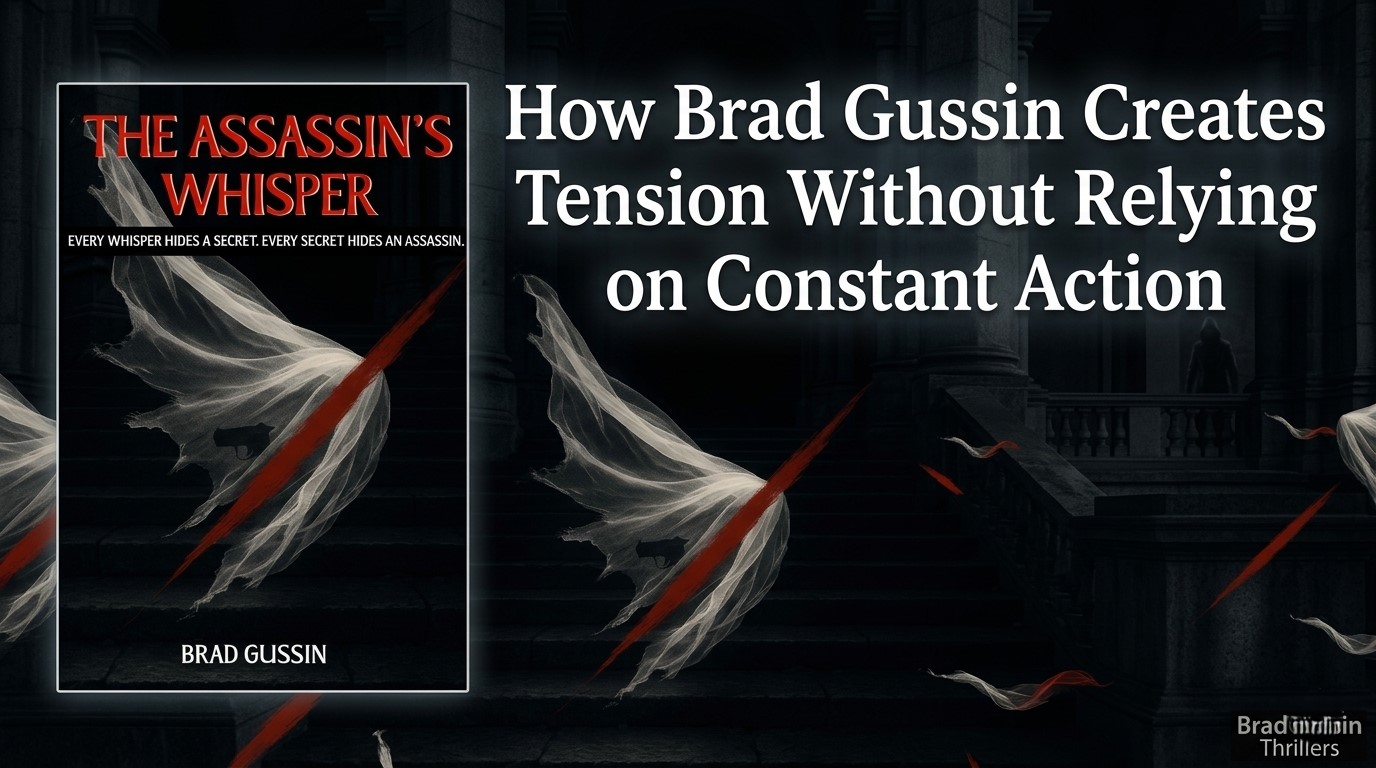
Many thrillers depend on speed to keep readers engaged. Chases, fights, and explosions appear one after another. In The Assassin’s Whisper, author Brad Gussin proves that tension does not need constant action to be effective.
Instead, he builds suspense through anticipation, restraint, and careful decision making. This approach gives the novel a calm intensity that feels realistic and deeply engaging.
Tension Begins Before Anything Happens
In The Assassin’s Whisper, the tension often starts long before something happens. Brad Gussin lets readers feel danger through mood and setup instead of right away.
A meeting that was set for the wrong time. A message that doesn’t fit. A person who waits instead of doing something. These moments show that something is risky without showing it directly.
Readers pay attention because they know something important is about to happen. This excitement makes people very interested.
Waiting as a Source of Stress
Waiting is a big part of the story. Scott Edwards often puts off doing things, not because he isn’t sure, but because timing is important.
Brad Gussin shows that doing something too soon can be just as bad as doing it too late. This means that waiting is a kind of pressure. Every moment of doubt matters.
Readers feel this tension because they know what Scott is putting at risk by waiting. The pause itself makes things more stressful.
Little Choices That Make a Big Difference
Brad Gussin doesn’t write big action scenes; instead, he writes about small choices that have big effects. A sentence spoken at the right time. A carefully placed thought. A decision to keep quiet.
These moments may seem small, but they have a big effect over time. Readers start to understand how control works in a quiet and effective way.
This method keeps the tension steady throughout the story instead of building it up in short bursts.
Characters Know What Will Happen
When characters know what dangers they face, the tension rises. Scott and the other Whisperers in The Assassin’s Whisper know exactly what will happen if they do what they do.
Brad Gussin writes characters who plan ahead. They think about what will happen before they do something. This knowledge makes things more real and interesting.
Readers can feel the danger more clearly because the characters know what could go wrong.
Not using action too much makes it stronger.
When there is action in the book, it really stands out. Brad Gussin is careful with action scenes, making sure they add to the story.
These moments feel sharp and intense because readers aren’t always moving around. They come with meaning instead of shock.
This limit makes actions more effective and easier to remember.
Psychological Pressure Over Physical Threat
A lot of the tension in The Assassin’s Whisper comes from mental stress. Characters are more afraid of being exposed, betrayed, and losing control than they are of getting hurt.
Brad Gussin shows that the fear of being found out can be worse than violence. You have to keep secrets safe at all costs.
This focus on psychological tension keeps the story real and believable.
A steady pace that keeps things interesting
The way the story moves along fits with its themes. Brad Gussin keeps a steady beat that lets the tension grow slowly.
There are times when you can think quietly and times when you have to act. This balance keeps readers interested without making them tired.
The story never feels rushed, but it also never stops moving forward.
Clear writing helps build suspense.
This kind of tension works well with Brad Gussin clear writing style. The language is clear and simple, which lets readers focus on what’s going on under the surface.
There is no doubt about what happened or why. This clarity makes it easier to feel the tension.
Complex language doesn’t bother readers. They are still deeply involved in the story.
Why This Method Works
It seems more real when there is tension without constant action. In real life, danger often sneaks up on you. Brad Gussin gets this truth across in The Assassin’s Whisper.
He builds suspense from the beginning to the end by using anticipation, restraint, and consequence.
People who like to think about a story rather than race through it will like this way of doing things.
People Who Will Like This Style
This way of writing will appeal to readers who like thrillers that make them think. People who like atmosphere, psychology, and slowly building tension will enjoy the book.
Readers who care more about meaning than spectacle will like it a lot.
Last Thoughts
Brad Gussin shows in The Assassin’s Whisper that tension doesn’t need to be there all the time to be strong. He makes the story feel controlled and intense by focusing on waiting, making decisions, and psychological pressure.
The book reminds us that the most dangerous times are often the quiet ones. The most intense tension is the kind that builds up over time and stays.