


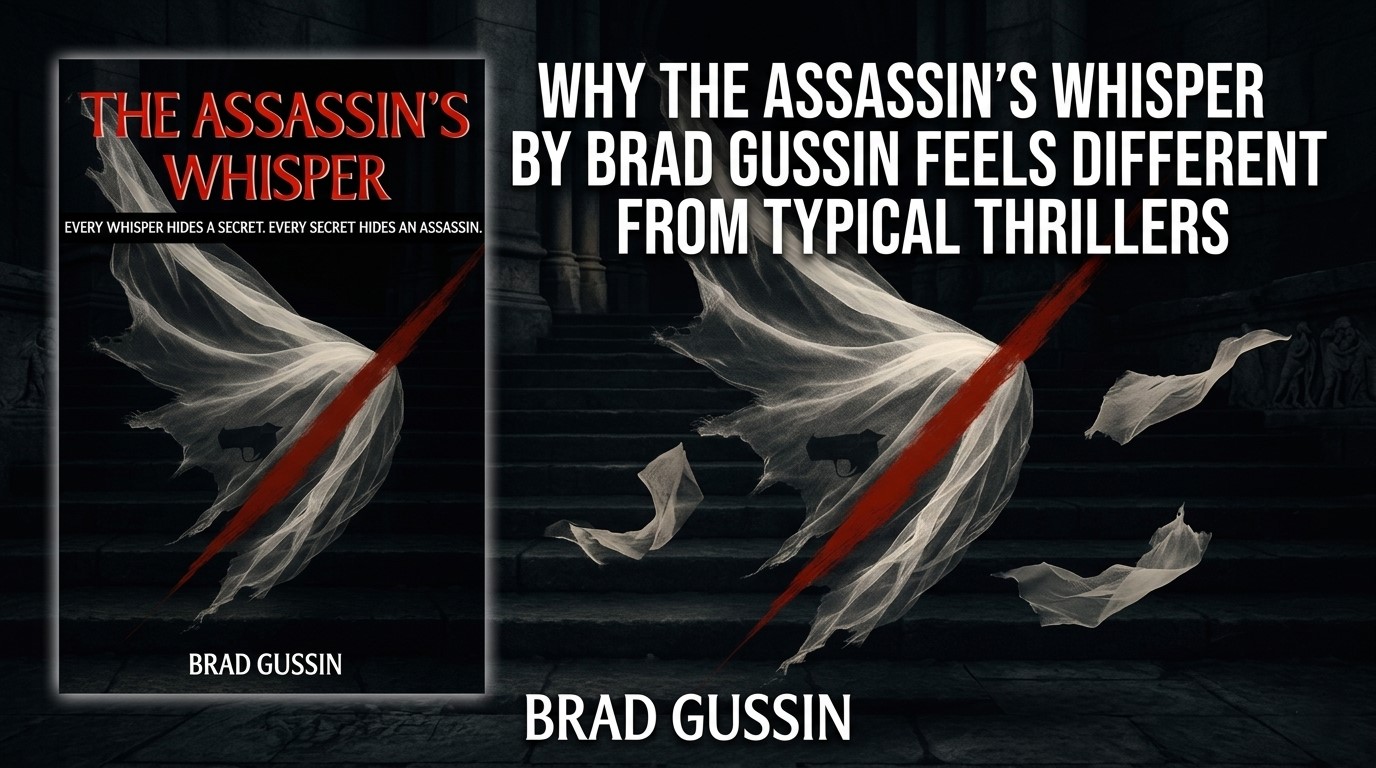
Most thrillers follow a familiar path. Fast action. Clear heroes and villains. Constant movement. While these elements can be exciting, they often leave little space for reflection. The Assassin’s Whisper by Brad Gussin takes a different approach. It slows things down and asks readers to pay attention to what usually goes unnoticed.
This novel is not about how loud power can be. It is about how quietly it works.
A Thriller That Focuses on Influence
The idea of influence is at the heart of The Assassin’s Whisper. Brad Gussin talks about Whisperers, who are people who are trained to help people make decisions and think without using force. They don’t threaten or give orders. They have an effect.
This idea sets the book apart from a lot of thrillers right away. Instead of explosions and fights all the time, the tension comes from conversations, pauses, and choices made in silence.
Readers start to understand that the quietest times are often the most dangerous. Putting one idea in the right place at the right time can change everything.
Scott Edwards is not like most heroes.
The main character, Scott Edwards, is not written like a typical action hero. He doesn’t run into danger. He doesn’t want to be noticed. He watches, listens, and waits.
Brad Gussin makes Scott look like an international journalist on the outside. He has the job of being a Whisperer, which is a lot of work. This double life puts a lot of stress on me. Scott needs to find a way to balance his public duties with his private ones.
Scott is interesting because he knows how to hold back. He knows how much it costs to use his skills. Every choice has consequences. He knows that power can help or hurt.
This internal struggle adds emotional depth to the story and keeps readers interested in Scott’s journey.
Silence Makes Things More Tense
Brad Gussin use of silence is one of the best things about The Assassin’s Whisper. Scenes with no action often feel heavier than scenes with a lot of action.
A meeting with no noise. A late answer. An unspoken thought. These moments are tense because readers know what’s at stake.
Brad Gussin lets scenes breathe. He trusts that readers will sense the danger without having to see it. This makes the tension seem more real and more scary.
Power Is Shown to Be a Burden
Characters in a lot of stories want power. Power is a burden in The Assassin’s Whisper.
Scott and the other Whisperers don’t brag about their skills. They are careful with them. Brad Gussin shows that having power means being responsible and alone. The more power a character has, the less they can trust other people.
This method gives the story a sense of reality. Power is not depicted as liberty. It is shown as a duty.
A World Formed by History and Heritage
Brad Gussin doesn’t only tell the story in the present. The Assassin’s Whisper links things that are happening now to things that have happened in the past. People pass on what they know to their children. Long-ago choices still affect today’s conflicts.
Family, mentorship, and legacy are all very important. Characters are shaped by both their choices and their inheritances.
The story has more depth because of this sense of history. People who read know that the world of Whisperers didn’t just show up out of nowhere. It took a long time to build.
Bad guys with clear reasons
The bad guys in The Assassin’s Whisper don’t just make empty threats. Brad Gussin gives them a reason to do things and a reason to do them. What they do is often upsetting, but it makes sense.
Some people want to be in charge because they are afraid of losing it. Some people do things out of ambition or to stay alive. This makes the conflict more interesting.
Readers are urged to think instead of just reacting. The story doesn’t make quick judgments and lets moral questions stay open.
Simple Language That Makes a Big Difference
Brad Gussin writing style is one of the things that makes The Assassin’s Whisper so good. It’s easy to understand and follow the language. There are no long words used to explain ideas.
This makes it easier for readers to focus on the story and what it means. It talks about complicated ideas like control, consent, and influence in a way that makes sense.
The pacing is steady. The story never seems to move too quickly or too slowly.
A Story That Seems Important
The Assassin’s Whisper is a work of fiction, but it deals with real issues. Everyday life includes influence, persuasion, and pressure that isn’t always obvious. Brad Gussin uses fiction to look at how decisions are made without making the story sound like a commentary.
Readers may think about how often choices feel like they’re coming from within, even when they’re being pushed by other people.
This relevance makes the book worth reading for more than just entertainment.
Who Will Like This Book
Brad Gussin The Assassin’s Whisper is a great book for people who like thrillers with a lot of depth. It works for people who like tension to build through the setting instead of constant action.
This book will be enjoyable for readers who like stories with complex characters, moral ambiguity, and slow pacing.
Last Thoughts
Brad Gussin The Assassin’s Whisper shows that a thriller doesn’t need a lot of noise to be good. The book is different because it focuses on silence, influence, and restraint.
Readers will remember this story because it makes them think more deeply. Power isn’t always easy to see. It only whispers sometimes.